Financial Opportunity Center® Resources

Reports & Publications

 LISC is dedicated to helping the coaches, managers, and staff running financial and career services programs so they can best serve community members. Below you will find a collection of resources and publications highlighting emerging strategies, performance data, and insights you can use to improve your program's services.  

LISC's Income & Wealth Building Reports & Publications
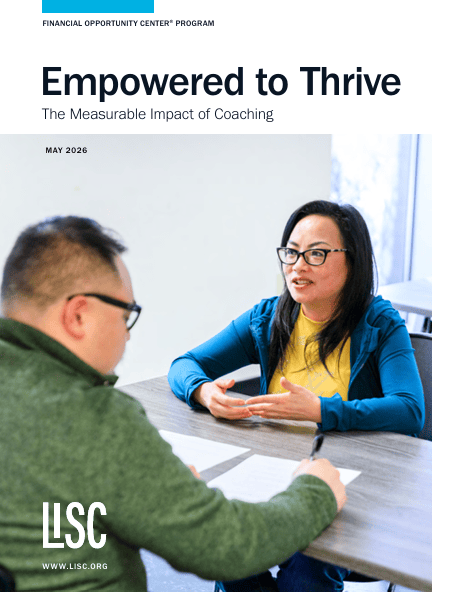
Empowered to Thrive: The Measurable Impact of Coaching

Financial Opportunity Center® data analysis demonstrates that intensive financial or career coaching—defined as five or more sessions with program coaches—leads to meaningful, measurable improvements in participants’ financial and employment outcomes. Explore our findings on the impact of our program model and hear strategies to help increase client retention in similar programs.
Find out more
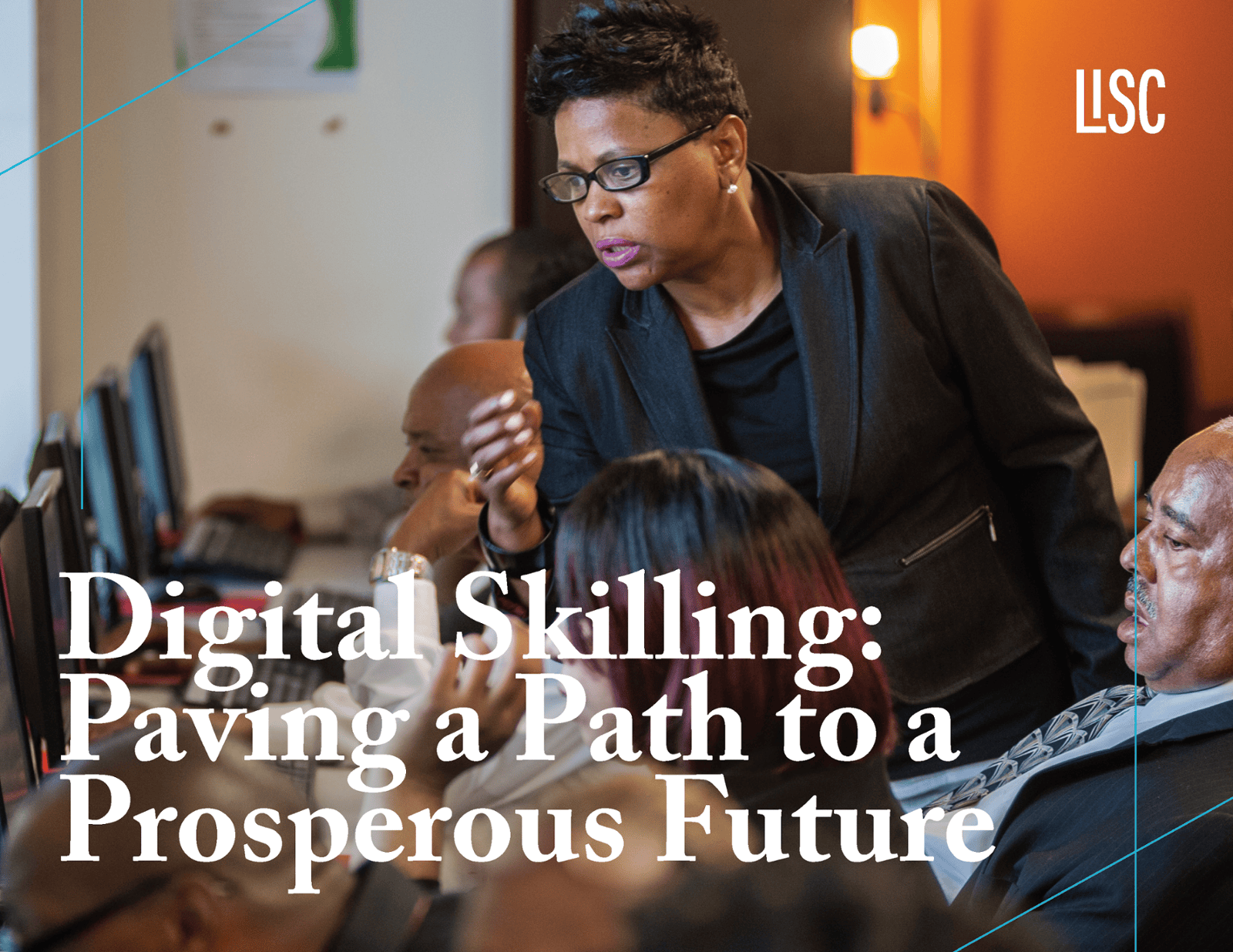
Digital Skilling: Paving a Path to a Prosperous Future
This report details the effectiveness of strategies piloted by LISC’s Financial Opportunity Center® and Bridges to Career Opportunities programs in equipping today’s workforce with digital skills in order to respond to the rapid digitalization of the labor market.
Find out more
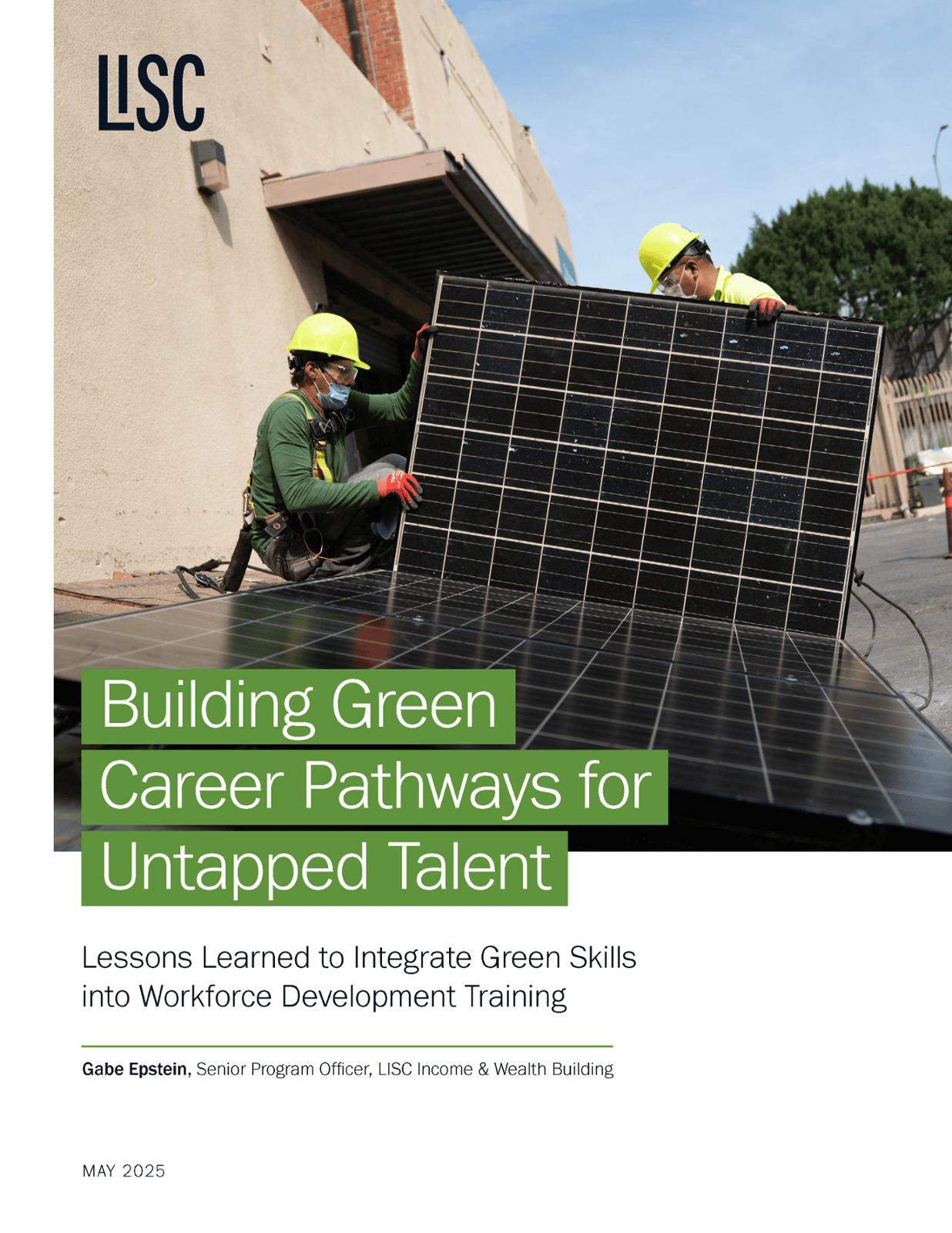
Building Green Career Pathways for Untapped Talent: Lessons Learned to Integrate Green Skills into Workforce Development Training

This guide is designed to assist workforce development organizations in creating new or improving existing green job training programs from conception to developing community member retention strategies and beyond. Best practices and case studies highlighted are from organizations in four states.

Find out more

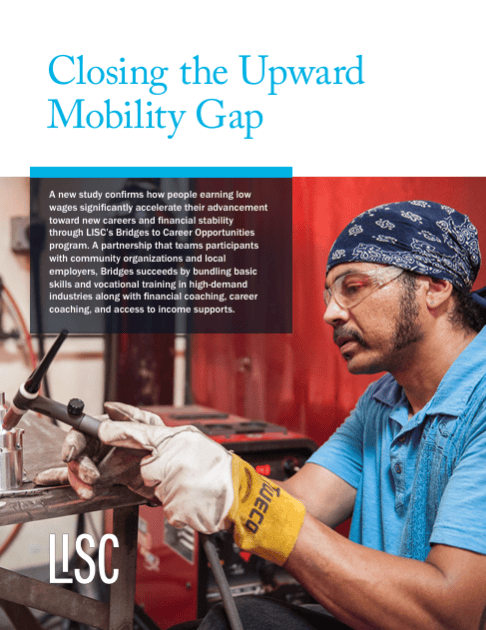
Closing the Upward Mobility Gap

A study confirms how people earning low wages significantly accelerate their advancement toward new careers and financial stability through LISC’s Bridges to Career Opportunities program.
Find out more

Partner Guide for Heirs’ Property & Estate Planning Programs

Discussing estate planning and heirs' property with a client can be a challenge. Find new strategies to help get residents started and keeping them engaged in LISC's 'Partner Guide for Heirs’ Property & Estate Planning Programs', so more people can successfully protect their homes and preserve family wealth. 


Use our simple quiz to determine what strategies may be useful for you. Tell us what type of program you are running and where folks are getting stuck, and this application will highlight a short list of strategies for your exact situation.

Find out more
Heir's Property Playbook
This practical, field-tested guide aims to help local community lead organizations and partners designs, launch, and grow Heirs' Property initiatives that stabilize ownership, preserve family wealth, and strengthen community legacy. 
Find out more
Applying Behavioral Science to Increase Retention in Financial Coaching


In a study from Duke University’s Center for Advanced Hindsight, behavioral science takes center stage, as researchers consider what motivates clients at LISC Financial Opportunity Center® programs and offer strategies to increase retention in the program so that more people have the chance to improve their financial outlook.
Find out more
LISC’s Financial Opportunity Center® Model Surpass Other Programs

An independent study has found that Financial Opportunity Center® (FOC) clients, who access a range of services, have more success meeting their financial goals than people in programs offering employment assistance alone. Their gains include landing and keeping a job, growing credit and increasing annual earnings. The research findings will help LISC refine and propel its financial stability work on behalf of low-income Americans.
Find out more
LISC study: Employment and financial services help low-income people make progress
LISC researchers recently analyzed outcomes from 40,000 people who visited Financial Opportunity Center® sites all across the country as a way to improve their economic circumstances. The data shows that those who took advantage of bundled services that focused on employment, income supports and financial management skills made significant, lasting progress—with incomes expanding by an encouraging 76 percent. Many thanks to the JPMorgan Chase Foundation for supporting the preparation, publication, and dissemination of this report.
Find out more
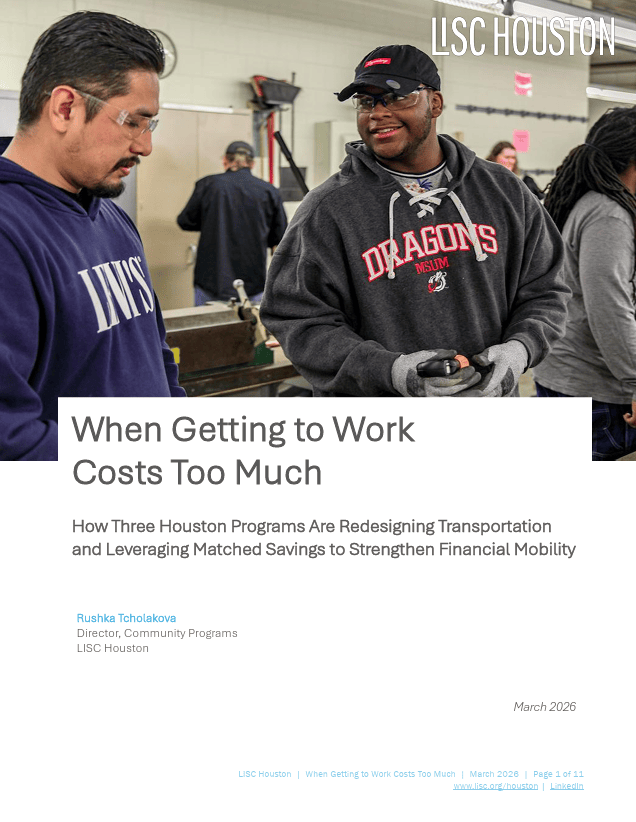
When Getting to Work Costs Too Much

Houston’s affordability crisis is often framed as a housing story, but for working families it’s just as much a transportation story. In a region as geographically dispersed as Greater Houston, the cost of getting to work, childcare, school, and healthcare functions like a “second rent.” And when transportation fails, income fails with it.

The conclusion of program data is sobering: wage growth alone cannot outpace systemic affordability pressures. In response, Houston FOC partners pilot a mobility strategy within workforce development and financial coaching systems to stabilize income and advance long-term financial growth.  Here, transportation is treated as both a stabilizer and an asset pathway.
Find out more
Loan Products for Credit-Building: An Impact Analysis of Twin Accounts
This paper compares the outcomes of Twin Accounts borrowers with other, statistically-matched, clients of LISC-supported Financial Opportunity Centers who did not open such accounts to find out whether their scores, in fact, improved. Results show that financial coaching, when paired with access to financial products, has a large impact on credit scores and credit building behaviors.
Find out more
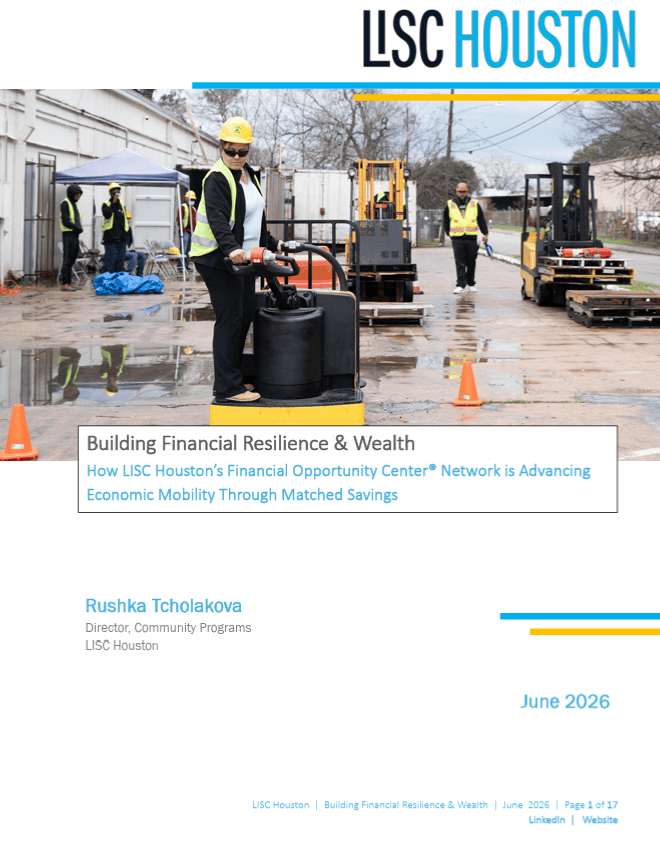
Building Financial Resilience & Wealth: How LISC Houston’s Financial Opportunity Center® Network is Advancing Economic Mobility Through Matched Savings

For many families, financial instability does not begin with unemployment. It begins with the absence of savings. Research consistently shows that households with even modest emergency savings are significantly more resilient during periods of financial disruption. Matched savings programs, integrated with larger economic mobility systems, interrupt this cycle by reinforcing positive financial behaviors and help build habits that increase financial stability and resilience. 
Find out more
“If It’s Not in the Data, It Didn’t Happen”: A Case Study in Client-Centered Data Practice: Wesley Community Center 
The Financial Opportunity Center® (FOC) model is data-driven, but Wesley Community Center’s results from Houston show it works best when data, coaching, and long-term trust reinforce one another, even at high volume.

Find out more
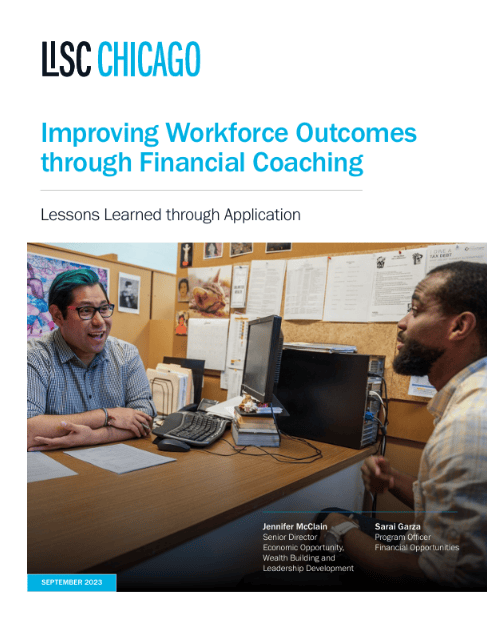
Improving Workforce Outcomes through Financial Coaching

Review insights LISC Chicago has gained from years of working with organizations to adopt and implement the Financial Opportunity Center® (FOC) model. The case studies highlight the experience of five Chicago-based organizations that participated in the Academy and are continuing to actively implement the model within their workforce services.

The recommendations are intended to help organizations new to the FOC model understand the benefits of integrating financial coaching with more traditional workforce services, how to overcome potential roadblocks, and what resources are required for implementation.

Find out more